Alex Rawls on definitive

In this week’s Pop Life column, Alex Rawls talks about definitive recordings.

offBeat :: Pop Life

Rob Wagner addressed this subject once when his “Lost Children” album was coming out. He talked about having a hard time getting excited about the CD not because he wasn’t happy with it, but because the recorded versions didn’t represent anything special to him. They weren’t the best versions of those compositions that he had ever performed, only the best of those performed at the session, and when he played those compositions in the future, they would never sound exactly like the album. In short, there wasn’t really anything authoritative about those versions, even though listeners tend to treat recorded versions of songs as THE versions.

This fits in with the Ken Vandermark championed idea that recordings aren’t particularly good ways to experience a band. Hearing improvisers regularly over a period of time is a much better way to understand the essence and progression of a group’s music.

Dave Douglas is using technology to get closer to this ideal.

Just outside

Brian Olewnick has some interesting thoughts about writing about friends and acquaintances.

Just outside

That said….I can’t deny that my perceptions of someone’s music is often biased to one degree or another by either what I think of them personally or, if I don’t actually know them, by what impression their (perceived) personality has made on me. It can work both ways.

Malachai Ritscher

Chicago Reader Blogs: Post No Bills – Malachi Ritscher’s apparent suicide

On Saturday the Sun-Times ran a small item about a man who had set himself on fire during rush hour Friday morning near the Ohio Street exit on the Kennedy. His identity had not been determined at the time, but members of the local jazz and improvised music community now say they are certain it was Malachi Ritscher, a longtime supporter of the scene.

I didn’t know Malachai Ritscher. He ran a site that had listings for all of the happenings in the Chicago jazz/improv scene. It was a service he provided to the community.

Apparently Malachai immolated himself in protest of the direction the United States is taking. Some people might dismiss him as a mad man. Even if he was a mad man, I know many crazy people that do not have the strength of conviction to set themselves on fire to raise awareness of injustice. Regardless of how any of us feel about Malachai’s final act or the ideas that led him to it, I hope his ultimately sincere dedication to his beliefs will lead us all to really think about how we live our lives and uphold our responsibilities as citizens.

Dave Douglas on M-Base 12 tone style

Greenleaf Music

One thing I didn’t do was ask the players in the group to “improvise twelve tone style.” I think improvisation is about freedom in context so I wouldn’t presume to tell them how to play, I would only create the context in which it could happen.

Too much theory can be deadening. But in my own playing I found the theory useful as a launching pad for escaping the hegemony of the tonic.

I love the way DD is able to express himself in words as it relates to his music. “Too much theory can be deadening.” I like that concept, especially if you follow it through to the idea that “too much” can be a different amount for each musician. What is too much for me, might not be even close to enough for some of my saxophonist friends. Find your own balance.

Ben Allison – Cowboy Justice

I have a few Ben Allison albums that I like, so when I saw Cowboy Justice on eMusic, it was a no-brainer to click the download button.

cowboy justice

I’ve given this a couple of listens, and I am really digging it. The compositions are good, and the grooves feel great, but the one thing that has really grabbed me on this album is the playing of trumpeter Ron Horton. I have heard his name before, but to my knowledge I hadn’t heard him play. I’m glad I am getting to hear him on this album. He sounds great.

Rick Parker Collective

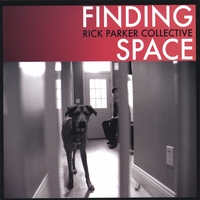
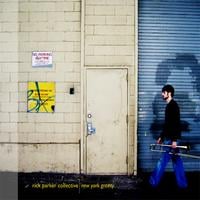
I just picked up two CDs from the Rick Parker Collective.

finding space


ny gravity

Finding Space is the newer of the two CDs. Both feature good compositions in the modern New York style: interesting harmonies, nice grooves, attention to the arrangements. Listening to them side by side is an interesting experience, because you can hear several years of evolution. New York Gravity was recorded within the first year after Rick moved to NY and you can hear that fresh young energy in it. I hear that energy change on the later CD. I don’t want to say it turns cynical, but it definitely changes.

Of course that could all be projected by me. That’s what I get for reading the liner notes. You might hear it differently, and I am sure it was meant differently by the artists, but that’s some of what I hear between the two discs.

Both discs are good. Check them out.