
Young ‘prefer illegal song swaps’

From a BBC story ,BBC NEWS | Entertainment | Young ‘prefer illegal song swaps’ :

Jupiter analyst Mark Mulligan said: “The digital youth of today are being brought up on a near limitless diet of free and disposable music from file-sharing networks.

“When these consumers age and increase spending power they should become key music buying consumers.

He added: “Unless the music industry can transition these consumers whilst they are young away from free consumption to paid music formats, be they digital or CDs, they may never develop music purchasing behaviour and the recording industry could suffer long-term harm.”

I think part of this is because the music industry is seen as a large cold faceless glob of evil, which much of it is. My friend, jazz artist David Gibson, has suggested that as we move to more independent production, that the artists will become the face of their music (instead of a many major labels that seem like they would prefer to sue you, or ruin your computer, as much as sell a CD to you), and people will be less likely to steal it. That seems to make sense.

Canadian artist Jane Siberry has a digital music store that seems to run on that theory. There is a nice description of the principle in this Boing Boing post.

A composer to scare the bejesus out of the IPO

An interesting look at a seemingly grumpy composer.

Haaretz – Israel News – A composer to scare the bejesus out of the IPO

I like this quote:

“Enjoyment is a historical experience. People enjoy Mozart, Dvorak, Berlioz. If I want to enjoy a melody, I go to Schubert. This is a cultural experience. But of a work that was written the day before yesterday, I am critical. The enjoyment is only a part of my listening, a niche. Art is too serious a matter to limit it to the concept of enjoyment. That’s primitive. When a work appeals to taste, it is appealing to a low level: This is the same taste that chooses the color of a car, or upholstery, or a table. This is the same taste that chooses what ice cream to lick. Taste is base artistic judgment.”

Thanks to John W for sending the article my way.

Deborah Weisz – Grace (for Will)

Grace (for Will) by Deborah Weisz is a rewarding CD of mostly original music. “Touch” by Jim McNeely, and the standard “Body and Soul” are the only compositions on the recording that aren’t by Weisz or one of her bandmates. The stylistic range is from the fairly free to the swinging straight ahead. “Pablo’s Crib” by saxophonist Andrew Sterman is particularly catchy.

Weisz’s trombone playing is superb. Her sound is rich and full, and her time feel is fluid and swinging. Andrew Sterman’s saxophone stands out in a positive way, especially when the band reaches to those farther out spaces. The presence of Olivier Ker Ourio’s chromatic harmonica on 5 tracks adds and interesting sonic color and a fresh new voice.

I bought this disc somewhat out of curiosity, because I was not very familiar with Weisz’s music. It has stayed in my personal rotation since it arrived. Grace (for Will) is available from Cadence and CD Baby.

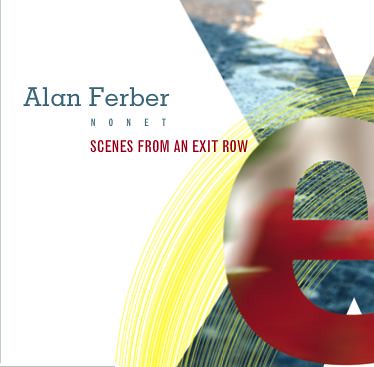
Alan Ferber Nonet – Scenes From An Exit Row

A few weeks ago, I heard about a podcast from RedJazz.com. I randomly picked an episode to explore, and was greeted with excellent large-ish jazz ensemble writing. As an added bonus, there was a great trombone solo on the tune as well. The host back announced the track as coming from the Alan Ferber Nonet’s CD Scenes From An Exit Row. Shortly thereafter, I ordered the Cd from CD Baby.

I figured that Ferber was the composer/arranger, because it sounded like it was a writer’s CD. It turns out that he is also the trombonist. The band is made up of talented young players from the NY scene. John Ellis is featured on tenor sax, and David Smith is listed on trumpet. I am pretty sure this is the Dave Smith that I worked with in a cruise ship band some years ago. Besides being a great musician and a nice guy, Dave was one of the founding members of the Bahamian Deck Hockey League.

Scenes From An Exit Row is full of great playing and writing, and cuts a pretty wide stytlistic swath. Ferber makes compelling use of less often heard colors like wordless vocals and bass clarinet. The tunes range from modern sounding multiple meter grooves, to Mingus flavored textures, and even pretty straight up bebop. Despite the stylistic range, this recording doesn’t sound like a demo or an aural calling card. It has a nice flow as a larger unit, and is an enjoyable and rewarding listen.

scenescdcover.jpg

Robert Bachner – Heart Disc

I first read about Robert Bachner‘s CD Heart Disc about a year ago, I guess. It caught my attention because he was mentioned as a member of the Vienna Art Orchestra. I wasn’t really familiar with Bachner’s name, but the one VAO disc I had at the time was one of my favorite large ensemble discs. I made a mental note that I should pick up Bachner’s CD. A few months ago, I actually noted my intention to buy the disc on a computer desktop stickie note (along with a reminder about a novel I wanted to buy, and a note to call my insurance adjuster).

Well, last week, while on a CD Baby surf fest, I finally ordered it. I’m glad I did, it is a great CD. The compositions are all by Bachner. He is joined by Christian Maurer on tenor and soprano saxes, Reinhard Micko on piano, Uli Langthaler on bass, and Christian Salfellner on drums. The music is often fiery and aggressive, and it swings. It is well crafted music that seems familiar on the first listen.

Bachner’s trombone playing is marvelous. He expresses himself confidently in every tempo, and we never hear any deficit of chops, yet he doesn’t play anything simply because he can. His range and facility are used to very musical ends. He takes full advantage of the trombone’s more aggressive and raucous capabilities (check out the title track) , lets the beauty and sensitivity flow when needed, like on “For Gary,” and always maintains his spark and urgency. The rest of the quintet matches Bachner’s musicality and spirit.

Gary Giddins on Lester Bowie

The updating josh of life, daily. » Gary Giddins on Lester

From Josh Roseman’s blog, referencing a Gary Giddins article in the Village Voice.

The line that scratched my brain was: “…suddenly everything he wrote about Goethe and Marx seemed to be about Lester. “Why should modern men, who have seen what man’s activity can bring about, passively accept the structure of their society as it is given?” A pretext for avant-garde jazz if I ever heard one.”